English VA T1
Image to analyse:
Paragraph 1 – Technical Elements
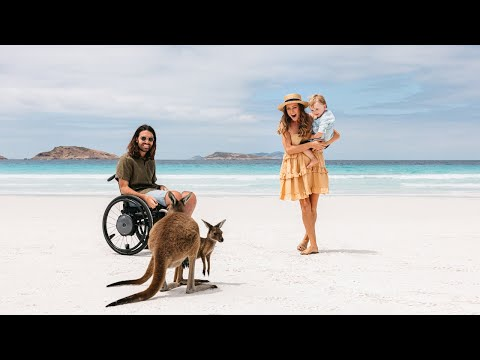
The image employs a carefully balanced arrangement of visual elements—such as composition, tonal range, depth of field, and camera angle—to portray its subjects as unified, empowered, and embedded in their environment. The strategic composition places a man in a wheelchair on the left and a woman holding a child on the right, establishing visual symmetry that suggests parity and mutual engagement. This balance is punctuated by an iconic kangaroo in the foreground that acts as a cultural anchor, drawing the viewer’s eye and reinforcing the sense of belonging to a distinct national landscape. The monochromatic palette—with gradations of light and shadow highlighting the pristine sands, expansive waters, and the textural contrast of the woman’s flowing dress—instils a feeling of harmony and timelessness. Additionally, the use of a level camera angle positions the viewers on equal footing with the subjects, while the deep depth of field ensures both foreground details and the expansive background are rendered with equal clarity. Collectively, these technical decisions construct a visual narrative in which individuals are portrayed as confident, interconnected participants in a shared, idyllic space.
Paragraph 2 – Stereotypes and Representation
The image adeptly navigates and contests stereotypes related to gender roles, family dynamics, and physical ability, crafting a layered representation that resists one-dimensional characterisation. The woman is depicted in a traditionally maternal role—as seen in her protective stance and flowing dress—yet her direct engagement with the natural environment hints at agency extending beyond mere nurturance. In contrast, the man’s presence in a wheelchair boldly challenges ableist assumptions, as his relaxed posture and central placement defy the notion of disability as a limitation to active participation. Both figures are portrayed with equal prominence, and their alignment within the frame suggests that differences in ability and gender are not hierarchical but rather complementary facets of modern identity. Through this balanced depiction, the image subverts traditional narratives, affirming that diversity in physical ability and gender expression need not lead to exclusion but can instead reinforce a collective human experience.
Paragraph 3 – Symbolism and Cultural Context
Beyond its technical execution, the photograph is imbued with symbolism that further articulates themes of cultural identity, accessibility, and the bond between people and nature. The kangaroo in the foreground, an indelible Australian icon, not only anchors the image in its cultural milieu but also symbolically aligns the man in a wheelchair with the natural landscape, challenging perceptions of separation between disability and the “wild.” The expansive beach and unobstructed horizon evoke a sense of freedom and possibility, suggesting that barriers—both visible and invisible—are meant to be transcended. Additionally, the casual attire of the man and the textural richness of the woman’s dress reinforce a narrative of ease and authenticity rather than performative idealisation. The juxtaposition of the wheelchair against the soft sand—typically an inaccessible terrain for mobility devices—further symbolizes the breaking down of environmental barriers and challenges conventional assumptions about who belongs in natural spaces. Through these deliberate symbolic choices, the image advances a vision of humanity that celebrates diversity, positioning cultural heritage and individual identity as intertwined aspects of a broader, more inclusive human experience.